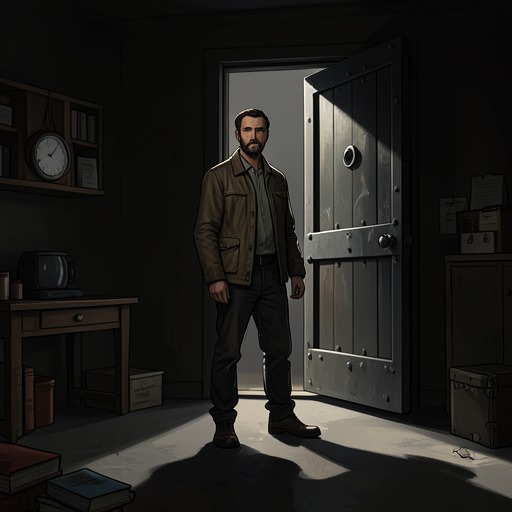
James Clements
Blow OutJames Clements is the father of Elaine Clements, a fifteen-year-old girl whose death from cocaine was ruled misadventure. His grief does not recede with time: it drives him to threaten the coroner, and, years later, he describes the sleeplessness, anger, and obsessive search for answers that followed her death. His account makes clear that his pursuit of responsibility is inseparable from an effort to live with the loss.
Identity and Background
James is Elaine’s father and the former husband of Helen Wilkins. Elaine was found dead in her bedroom by her father; the post-mortem attributed her death to an overdose, and the inquest classified it as misadventure caused by self-administered opiates. The substance was cocaine. The official language supplies a cause of death, but for James it does not settle the question of how his daughter came to take a fatal dose.
His later account presents Elaine as inexperienced with cocaine. James argues that she could not have known that a dose she was trying for the first time might kill her, particularly in a market where, he says, cocaine purity was increasing. His anger is directed not only at the loss itself but at the perceived indifference of the people selling the drug.
Grief and the Inquest
Elaine’s death remained an active wound for James. When police approach Helen about the threats made against the coroner, Helen immediately recognizes the subject: James’s reaction to their daughter’s death and the threats he made. She rejects the idea that the past can simply be brought back, saying that it never went away and never would. Her response conveys the lasting force of the family loss, even as the investigation focuses on James’s conduct.
James describes what followed in bodily and psychological terms. Finding Elaine lying across the bed turned his life upside down. He could not sleep because sleep brought vivid, horrible dreams; he remained angry and on edge, and his appetite changed into what he calls a terrible need to gorge himself. These details show grief taking over ordinary rhythms rather than remaining a feeling confined to the inquest or to a single outburst.
He believed he would go mad unless he could get to the bottom of why Elaine had died. The inquest’s verdict of misadventure did not answer the moral and practical questions he needed resolved. In his account, that unresolved need helps explain both his threats and the persistence of his efforts to investigate the circumstances surrounding her death.
Investigation and Anger
James describes his anger as a response to a system that seemed to leave him powerless. He recalls that there had been 139 cocaine deaths that year, and says the number was rising year on year. He had been told that increased purity in the cocaine supply meant even experienced users might not realize that their usual dose could prove fatal. For Elaine, who was experimenting with cocaine for the first time, he sees this danger as one she had no fair chance to recognize.
He also says that he tracked down a dealer, only to have the man laugh in his face. That encounter sharpened the contrast between a father’s demand for an explanation and the apparent impunity of those profiting from drugs. James’s pursuit of answers therefore becomes more than a private response to bereavement: it is an attempt to confront a world in which, as he sees it, neither the market nor its dealers take responsibility for deaths like Elaine’s.
Family Life and Withdrawal
The loss altered the life James had shared with Helen. He moved out in December 2012, exactly two years to the day after Elaine died. Their divorce became final the following September. The dates connect the breakdown of the marriage to the anniversary of their daughter’s death without reducing the separation to a single cause; they mark how closely the family’s later changes remain tied to Elaine’s absence.
James first rented a flat in town. After the house was sold and he had enough money to buy a place outright, he moved to a terraced house in Rusholme. Later, he explains that he came to get away from everything that reminded him why he was angry and from the deeper pain he was trying to avoid. The move offers distance, but his account makes clear that distance did not end the grief: Elaine’s death remained the defining event around which his anger and search for answers continued.
Narrative Role
James is first present in the investigation through the consequences of his response to Elaine’s death: the threats against the coroner and the history that Helen identifies when detectives question her. When he speaks for himself, the case’s official terms—overdose, misadventure, drug misuse—are set against a father’s account of shock, insomnia, rage, and unanswered questions.
That contrast gives his character a troubled double significance. His grief helps make his conduct intelligible, but it does not erase the threats or make his conclusions about responsibility equivalent to the inquest’s finding. His account instead exposes the distance between a formal verdict and the continuing need of a bereaved parent to know why his child died. James’s story is shaped by the failure of any one answer to close that distance.